
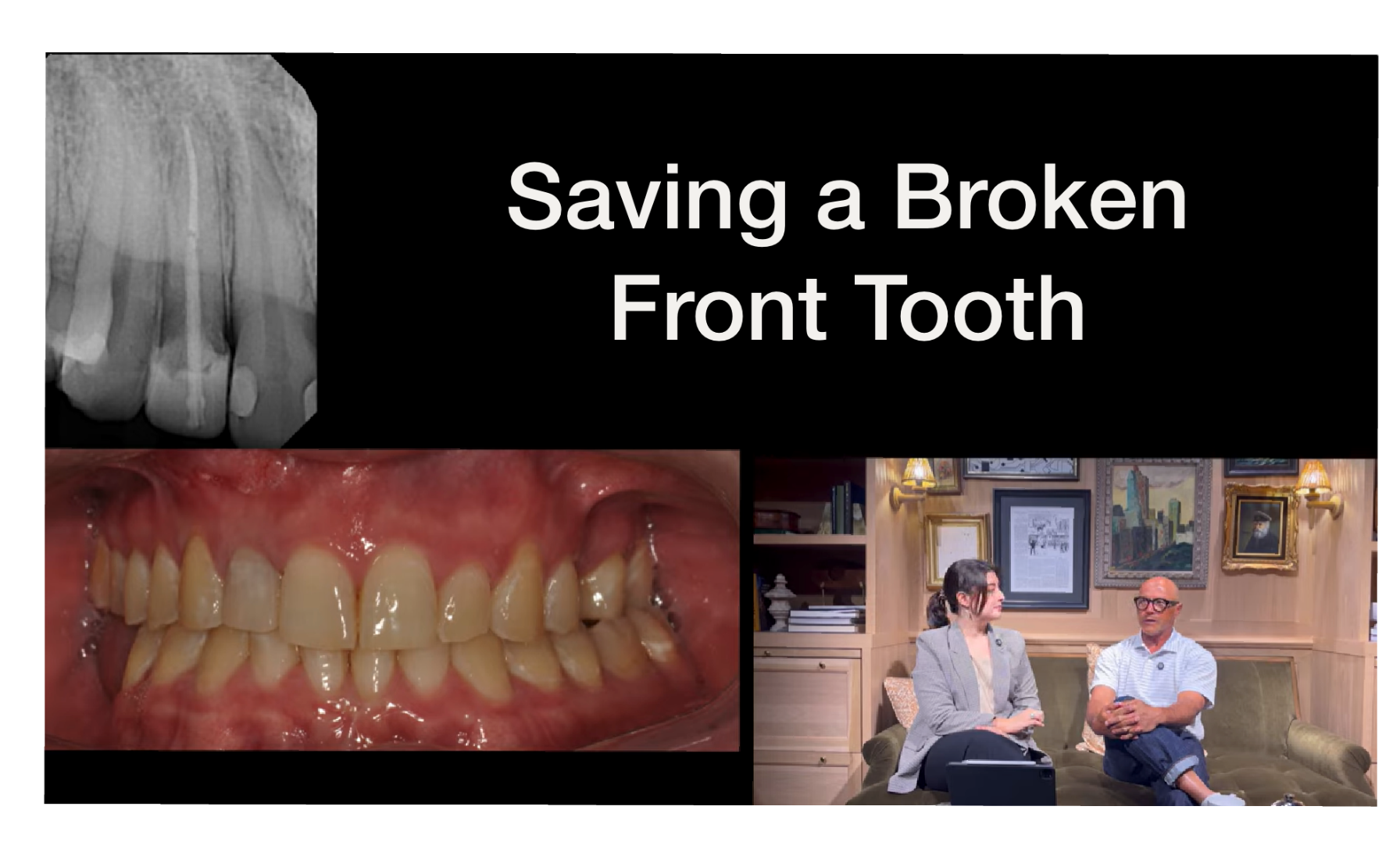
» Click here for a video version of this blog on our YouTube Channel «
Is it possible to save a broken front tooth? And if so, what factors do dentists look for when making these decisions?
These are questions we hope to answer in this blog, which shares a recent case we saw in our dental practice and how we came to the decision to save our patient’s front tooth using evidence-based dentistry.
Case Overview: Seeking a second opinion for a broken front tooth
A patient in their mid-20s presented with a broken front tooth. He was told by another dentist that his tooth could not be saved, and he would need an implant. Before making this decision, he wanted to understand all possible options and find out if this was truly the best course of action.


Upon examination, we saw that the tooth had a clear break near the gumline. The radiograph showed that there was healthy bone and a good amount of tooth structure beneath the gumline. The patient also had a long root with 4-5mm of ferrule, or tooth structure above the bone level. This tooth was not periodontally involved, meaning there was no significant bone loss or periodontal disease threatening its foundation.
Based on our examination, we determined that the patient had high functional risk, which placed undue force on his lateral teeth (the two teeth adjacent to the front teeth). He was also missing teeth on the top and bottom, including his six-year molar. In addition, he was in the middle of orthodontic treatment.
Pros: A Case for Saving a Front Tooth
Based on the data we collected, there were several factors working in this patient’s favor to save his front tooth, including:
- Adequate tooth structure below the gumline
- Adequate tooth structure above the gumline (ferrule)
- Healthy bone with no periodontal disease
Based on evidence, this information tells us that the patient has a strong foundational support and favorable tooth structure to save the tooth. This is important because it provides improved strength and predictability for a dental restoration.
Cons: Obstacles We Needed to Overcome
While there were several factors working in this patient’s favor, there were obstacles we would need to overcome to save his tooth, including:
High functional risk. This is another way to describe patients with accelerated tooth wear or frequent fractures. In this case, the patient had strong jaw muscles that led to wear on his lateral teeth. He has worn down the cuspid that provides protection to the lateral tooth that broke.
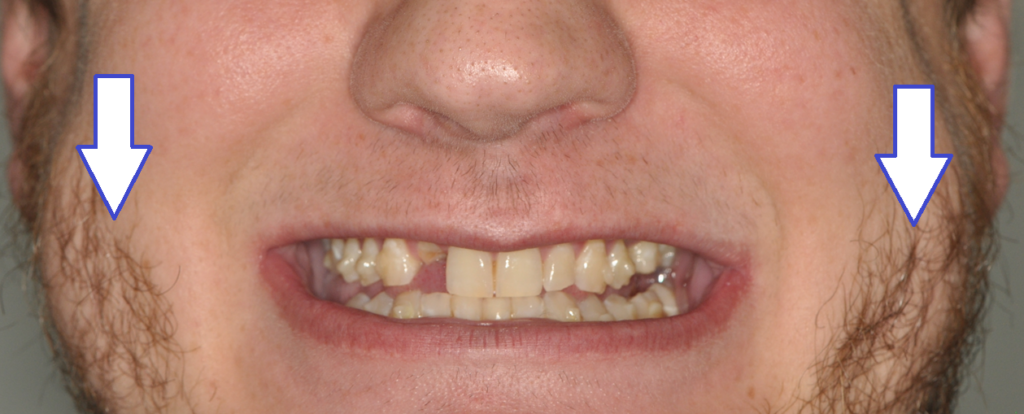
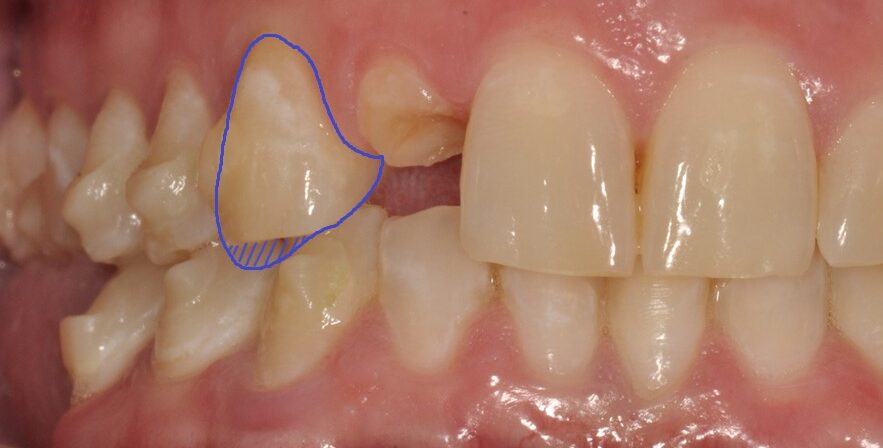
Missing teeth. When a patient is missing teeth, this places undue force on the surrounding teeth. In this case, the patient was missing his right posterior molars which puts more load on the front teeth where it shouldn’t be. Added force on the front tooth could also compromise the restoration.
Our Evidence-Based Recommendation
Based on these factors, we concluded the tooth was reasonable and worthwhile to save. Although the patient has several obstacles to overcome, our team identified ways to reduce this risk and improve predictability. The tooth also had a strong foundation and enough tooth structure to outweigh the cons in this case.
Given the patient was in his mid-20s, it was also important that we explored all options before extracting the tooth and placing an implant. Placing an implant too early can have downsides for patients who hope to keep their teeth until they are 100. Including poor aesthetics as the surrounding teeth change over time.
A Phased Treatment Approach
While the data and science told us we could save this tooth, doing so required a multi-phase approach.
- Phase One: Overcoming Obstacles. Working with the patient’s orthodontist, we erupted the tooth slightly to gain more ferrule and provide added tooth structure for a crown to adhere correctly. We also suggested strategic adjustments to his bite and alignment to shift forces away from vulnerable lateral teeth. At the same time, we placed a temporary BioClear restoration as an interim solution to improve the aesthetic of his smile.
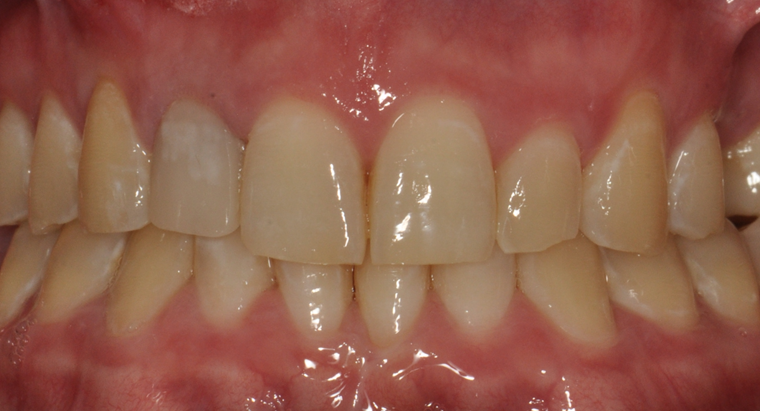
- Phase Two: Final Restoration. After the orthodontic improvements, the patient returned to our office to have a crown placed on the front tooth. We also fit the patient for a bite guard to wear at night to protect the crown from wear due to his high functional risk.
The Importance of Informed Decisions
As this case demonstrates, not all broken teeth are doomed to extraction and implants. By carefully evaluating the patient’s risk factors and overall dental health, we can make evidence-based treatment decisions that are in the patients’ best interest.
In our office, we pride ourselves on educating our patients so they can make informed decisions. The choice between saving a natural tooth and opting for an implant is a significant one that deserves careful, science-driven evaluation and full patient buy-in.
Looking for an evidence-based dental practice where you have buy-in on your treatment decisions? Call our office to schedule an appointment with our experienced team of dentists at 813-689-4226 or schedule an appointment online.